

The Primitives
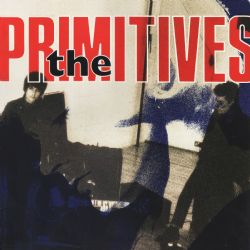
Lovely – The Primitives – Cherry Red double CD CDBRED 578
The current upsurge of interest in the 1980’s does have a saving grace. The decade that is almost universally loathed for its opportunistic, lightweight pop noodlings was the setting for some extraordinarily beautiful, nostalgic and plaintive music. Step forward Coventry’s Primitives.
Devotees of the jangling guitar sound, driving, metronomic bass and drums, and Tracey Tracey’s lemon and honey voice, ‘Crash’ burst its way into the already tightly packed pop charts like a souped-up mini through a pile of tea chests. This followed the comparative failure of two excellent singles, ‘Stop Killing Me’ and ‘Thru The Flowers’ but they’re on this ‘re-release plus’ of their debut album, so no grumbles from me.
The template was established from day one, but not slavishly adhered to; a little Country & Western whine gave ‘Carry Me Home’ a separate identity, and the Eastern stylings of ‘Shadow’ brought sophistication and showed an awareness of the emerging Bhangra music scene that indie fans might have been unaware of before this.
Reverting to type never did them any harm, and with standouts like ‘I’ll Stick With You’ and ‘Run, Baby Run’, it’s not surprising they took this course.

The clean, breezy atmosphere of most of their work is a sugared pill, as lyrics reveal themselves to contain joyful brush-offs like ‘Way Behind Me’, abrupt warnings like ‘Crash’ and the mocking humour of ‘Spacehead’.
The pot was kept boiling, in terms of musical style and quality, for a few more years, but ‘Crash’ represented the peak of their success. Remixes and cinematic use have followed, testament to the enduring strength of this irresistible track. Happily, The Primitives are touring once more, and you can check out Long John’s review of their appearance at the recent ‘Scared To Get Happy’ gig, elsewhere on Eyeplug’s site.
Disc 2 is a mixed bag of alternate takes and live tracks that would probably have been best left on the editing suite floor. A slowed-down ‘Crash’? An acoustic ‘Way Behind Me’? Even Primitives completists might balk at the presumption of releasing material like this.
The return of their sweet, tuneful sound is more than welcome, and this re-release would fill a fun shaped gap in anyone’s record collection. Buy HERE!
Microdisney
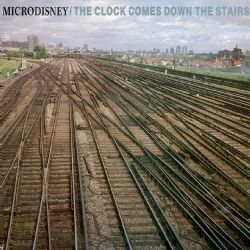

The Clock Comes Down The Stairs – Microdisney – CDMRED 581
Cherry Red are offering us an opportunity to catch up on Microdisney, a duo from County Cork who infiltrated the world of rock in the early 80’s with artistically valid intentions, if little commercial success.
This, their fourth album, sees singer Cathal Coughlan and guitarist Sean O’ Hagan in confident form, penning thoughtful tales of life, love gone sour, drug addiction, ambition and much else besides. The sparse, unobtrusive backing from Sean O’Hagan and supporting cast is balanced with the strong singing style of Cathal Coughlan, reminiscent of Scott Walker, as big personal issues are tackled head-on. A hint of twangy guitar punctuates, without overpowering the songs.
In ‘Horse Overboard’, it’s the sweetness of the music, with its suggestion of steel drum that lulls the listener into a false sense of security as an old salt recounts the break-up of his marriage.
Thwarted ambition and the inequality of life in the 1980’s is rolled out on the Dickens-like ‘Past’, as girl, in her search for employment, ends up losing her home and possessions and finds herself on the gin house floor.
Atonement is, unsurprisingly, a favourite theme, and well realised with the surreal ‘Humane’, a typically intense view of the father/son relationship with madcap farmyard imagery. ‘Genius’, with its deceptively happy tune, tells the tale of a philanderer who returns home to face the consequences of his infidelity, all the while trying to convince himself of his great talent by repeating ’You’re a genius, you’re a giant’ in his head.
’Are you Happy’ sees us back in break-up aftermath mode, this time the former lover haunting our narrator like an old ghost, all to a nervous soundtrack of alienation with a five mile run-out.
‘Goodbye It’s 1987’’s twanging guitars and stentorian vocal delivery perfectly suit the tale of urban isolation in a climate of impending war.
The tragedy of youthful drug addiction is played out in ‘Money for Trams’, with a tense bass rumble and a snaking sound to the drums building a suitably uncomfortable atmosphere, only topped by the screamed refrain of ‘Take Your Stinking Clothes Off’. As a piece of theatre, it works brilliantly, but beggars the question, who would enjoy it as a piece of pop music?
Added bonuses include B Sides and Peel Sessions that often prove more illuminating than their official LP versions, ‘Genius’ in particular. The upbeat rhythm of ‘464’ takes us to late night Jazz club territory, but not for long. This tale of a corny attempt at seduction ends up with the narrator bemoaning the loss of a friend’s former home to the wrecker’s ball.
The broad church of 1980’s pop/rock music saw its courage and tolerance tested with Microdisney’s sweet and sour tales of life. Give it a try, but take care; the taste may not be easy to get out of your mouth. Buy HERE!
Microdisney

Love Your Enemies – Microdisney ’82-84 – CDMRED 579
This re-release of Microdisney’s third album (original chart-unfriendly title: ‘We Hate you South African Bastards’) may sound like a Odds ‘n’ Sods collection of early singles and alt-versions, but proves to be revealing and contains material superior to the original. Championed by the late, great John Peel, this CD reprises the sessions they did for this essential show, among other material
As befits the title, we’re on typically uncomfortable ground with ‘Helicopter of the Holy Ghost’, with its snarling organ, hand claps and smooth guitar, and Cathal Coughlan’s distant vocal telling the tale of a lovers’ parting, with empty promises traded. ‘Michael Murphy’s spy film-theme feel, compressed organ sound backed with guitars is a good spacer for some of the more fraught moments on this particular album.
Title track ‘Love Your Enemies’ comes over as a meditation on living in a totalitarian state, to a trip hop style beat, the lyrics filled with nightmare scenes of oppression and self-abnegation. It was perhaps seeing such scenes regularly on 1980’s television that led to the duo giving such a vituperative title to their third LP. ‘Fiction Land’, with its lapping guitar, is the perfect backing for this remembrance of a happy day, (or night?), tinged with loss and regret.
‘Pink Skinned Man’s lament, with slow, mournful guitar, lays bare a man’s dissatisfaction with a relationship. Told in the debased imagery of a financial transaction, his final departure is told like someone refusing to throw good money after bad.
With plenty of time to extemporise, ‘Patrick Moore Says You Can’t Park Here’ has electronic drums, lapping guitar and a long echo, offering us a peaceful guitar-led instrumental to sweeten the pill.
‘Hello Rascals’ surreal carousel organ is an inebriate man’s wild dream, his mind filled with memories of how loved and cared for he was as a child, now homeless and forgotten. Recalling ‘Something Wicked This Way Comes’ dreamier moments, I doubt anyone could remain unaffected by it.
‘Pretoria Quick Step’s country guitar over a synthesised drum and cymbal beat makes an effect desert-like, the gods in discord, us looking at the far horizon for escape. Loftholdingswood’ is a true rocker, with pounding piano chords, a climbing-the-stairs beat, the lyrics a shaming of a reluctant friend into joining an important demonstration. The later version ‘Leftholdingswood’ is more robust still, and the message strong as ever.
‘Teddy Dogs’ with its more conventional 80’s pop beat, and an almost Duran Duran feel to it, hides lyrics of the most disturbing nature. The pointlessness of existence and the certainty of death, likely by violent means, all make this a dark treasure. The later version on the same CD surpasses even this.
‘464’ is a far superior cut to the original, all screaming voice, fuzzy, scratching backup, and the refrain of ‘Bring back the street, I liked it so’, sung with bitter memories flooding the mind .
‘Dreaming Drains’, with characteristic twangy guitar, and like some forgotten psychodrama from late night 1960’s television, the tale of a derelict socialite whose personality defects are a source of fascination to his hosts.
‘A Friend With A Big Mouth’s pedestrian beat and twangy guitar tells a child-like tale of dependence and revenge, opening with a clear reference to children’s favourites, Jack and Jill. A dream that is rudely interrupted by an unwelcome friend sees the friendship destroyed.
Whether you had an opinion on Microdisney before or not, your first listen to this incendiary CD is certain to provoke one. Buy HERE!